Introduction
Many Americans work hard to save money, yet small banking fees can quietly reduce their account balances over time. Whether it’s a monthly maintenance charge, an overdraft fee, or an out-of-network ATM fee, these costs can add up faster than most people realize.
The good news is that many banking fees are avoidable. By understanding how banks charge fees and learning a few simple money-management strategies, consumers can keep more of their hard-earned cash.
In this guide, we’ll explore common banking fees and how Americans can avoid them, explain why these charges exist, and share practical tips to help you save money while managing your finances more effectively.
Why Banking Fees Matter
Banking fees may seem small individually, but they can have a significant impact over time.
For example, imagine someone pays:
- $10 monthly maintenance fee
- $35 overdraft fee twice per year
- $3 ATM fee twice per month
Over the course of a year, these charges could total hundreds of dollars.
Understanding common banking fees and how Americans can avoid them can help improve financial health and prevent unnecessary expenses.
Monthly Maintenance Fees
One of the most common charges consumers face is a monthly maintenance fee.
Banks often charge these fees to cover account servicing costs.
Typical Monthly Fee Range
- $5 to $15 per month
- Sometimes higher for premium accounts
How to Avoid Monthly Maintenance Fees
Many banks waive these charges if you:
- Maintain a minimum balance
- Set up direct deposit
- Meet monthly transaction requirements
- Choose a fee-free checking account
Before opening an account, always review the bank’s fee schedule.
Overdraft Fees
An overdraft occurs when you spend more money than is available in your checking account.
Traditionally, banks may cover the transaction and charge an overdraft fee.
Why Overdraft Fees Happen
Common causes include:
- Forgotten automatic payments
- Debit card purchases
- Subscription renewals
- Timing differences between deposits and withdrawals
How to Avoid Overdraft Fees
You can reduce the risk by:
- Monitoring your account balance regularly
- Setting low-balance alerts
- Linking a savings account for overdraft protection
- Keeping a small financial buffer in your account
Many financial institutions now offer fee-free overdraft programs, making account comparisons worthwhile.
ATM Fees
ATM fees are another common banking expense.
You may be charged when using an ATM outside your bank’s network.
Types of ATM Fees
- Bank ATM fee
- ATM operator fee
- International ATM fee
Sometimes customers pay both a bank fee and an ATM owner fee for a single withdrawal.
How to Avoid ATM Fees
Consider these strategies:
- Use in-network ATMs
- Choose banks that reimburse ATM charges
- Withdraw larger amounts less frequently
- Use cash-back options at retail stores
These simple habits can help reduce unnecessary costs.
Excess Transaction Fees
Although banking regulations have evolved, some accounts still place limits on certain transactions.
Excess transaction fees may occur when customers exceed account limits or perform restricted activities.
How to Avoid Excess Transaction Fees
- Understand your account’s transaction rules
- Review account disclosures carefully
- Use checking accounts for frequent transactions
- Monitor activity through mobile banking apps
Being aware of account limitations can prevent unexpected charges.
Wire Transfer Fees
Wire transfers provide a fast way to move money, but they often come with fees.
Common Wire Transfer Costs
- Domestic transfer fees
- International transfer fees
- Receiving wire fees
How to Avoid or Reduce Wire Fees
Consider alternatives such as:
- Bank-to-bank transfers
- Peer-to-peer payment services
- Automated Clearing House (ACH) transfers
For many routine transactions, these options are less expensive.
Foreign Transaction Fees
Americans who travel internationally or shop from overseas retailers may encounter foreign transaction fees.
These charges typically apply when purchases are made in foreign currencies.
How to Avoid Foreign Transaction Fees
Look for:
- Travel-friendly debit cards
- Banks that waive foreign transaction fees
- Multi-currency account options
Frequent travelers can save significant money by choosing the right banking products.
Paper Statement Fees
As digital banking becomes more common, some institutions charge customers for receiving paper statements.
How to Avoid Statement Fees
The easiest solution is to:
- Enroll in electronic statements
- Use mobile banking apps
- Access statements online
This not only saves money but also reduces paper waste.
Real-Life Example: Saving Money on Banking Fees
Consider Emily, a nurse living in Florida.
A few years ago, she regularly paid:
- Monthly account maintenance fees
- ATM charges
- Occasional overdraft fees
After reviewing her banking habits, she:
- Switched to a fee-free checking account
- Set up direct deposit
- Activated balance alerts
- Used only network ATMs
As a result, Emily saved over $200 annually in banking fees.
Small changes often lead to meaningful savings.
Step-by-Step Guide to Avoiding Banking Fees
If you’re serious about reducing unnecessary costs, follow these practical steps.
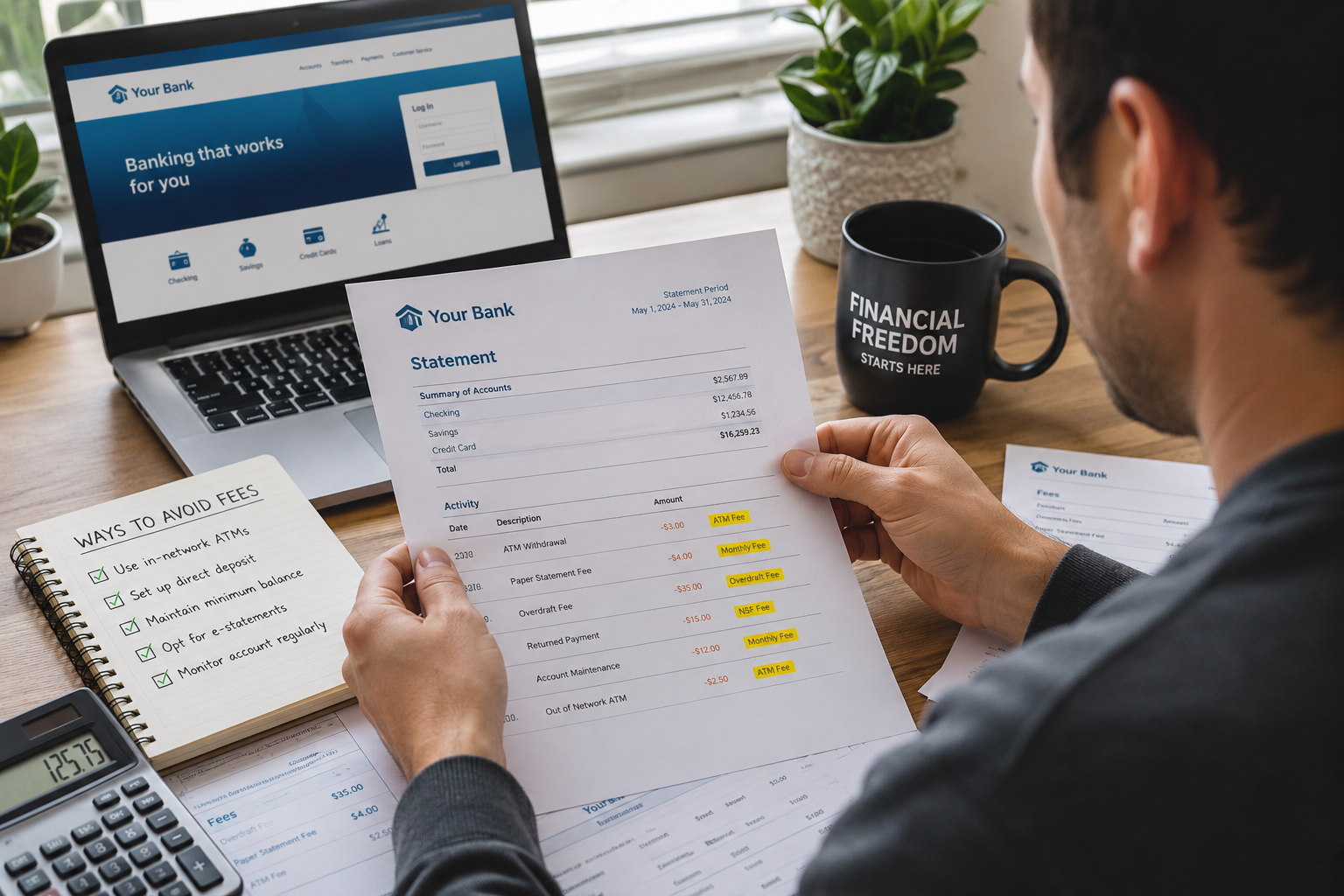
Step 1: Review Your Account Statements
Look for recurring fees such as:
- Maintenance charges
- ATM fees
- Overdraft penalties
- Transfer fees
Identifying patterns is the first step toward improvement.
Step 2: Compare Banking Options
Many online banks and credit unions offer:
- Lower fees
- Free checking accounts
- Better savings rates
Regular comparisons can help you find better financial products.
Step 3: Enable Mobile Alerts
Most banks provide notifications for:
- Low balances
- Large transactions
- Direct deposits
- Potential overdrafts
Alerts help you stay informed and avoid mistakes.
Step 4: Maintain Minimum Balance Requirements
If your account requires a minimum balance to avoid fees, make this amount part of your monthly budget planning.
Step 5: Use Digital Banking Tools
Mobile apps often provide:
- Budget tracking
- Spending insights
- Transaction monitoring
These tools make account management easier and more efficient.
Additional Tips for Reducing Banking Costs
Here are a few extra strategies Americans can use:
- Read account terms before opening an account
- Ask banks about fee waivers
- Bundle services when beneficial
- Use direct deposit whenever possible
- Check ATM networks before traveling
- Review accounts annually
Even a few minutes of financial maintenance can prevent costly surprises.
Frequently Asked Questions (FAQ)
1. What is the most common banking fee?
Monthly maintenance fees and overdraft fees are among the most common charges consumers encounter.
2. Can banks waive certain fees?
Yes. Many banks will waive fees if customers meet account requirements or request assistance in specific situations.
3. Are online banks cheaper than traditional banks?
In many cases, online banks offer lower fees because they have lower operating costs.
4. How can I avoid overdraft charges completely?
Maintaining a balance cushion, enabling alerts, and using overdraft protection can significantly reduce the risk.
5. Do all banks charge ATM fees?
No. Some banks provide large ATM networks or reimburse out-of-network ATM fees.
6. Is it worth switching banks to save money?
If you’re paying frequent fees, switching to a lower-cost account can lead to substantial annual savings.
Conclusion
Understanding common banking fees and how Americans can avoid them is an important step toward stronger financial management. While banking fees may appear small, they can gradually reduce your savings and increase financial stress if left unchecked.
The good news is that most fees are preventable. By choosing the right account, monitoring balances, using digital banking tools, and reviewing account terms carefully, you can keep more of your money where it belongs—in your pocket.
Smart banking isn’t just about earning interest or accessing convenient services. It’s also about minimizing unnecessary expenses and making informed financial decisions. A few simple adjustments today can lead to significant savings over time.
Call to Action (CTA): Encourage readers to explore more articles on the website.
Looking for more practical financial advice? Explore more articles on our website for expert tips on banking, saving, investing, insurance, budgeting, and building a stronger financial future.