
Introduction
A good credit score can open doors to better financial opportunities. Whether you’re applying for a mortgage, auto loan, credit card, or even renting an apartment, your credit score plays a major role in the decisions lenders and financial institutions make.
Many Americans believe that improving a credit score only involves credit cards and loans. While those factors are important, your bank account can also help strengthen your financial profile and support healthy credit habits.
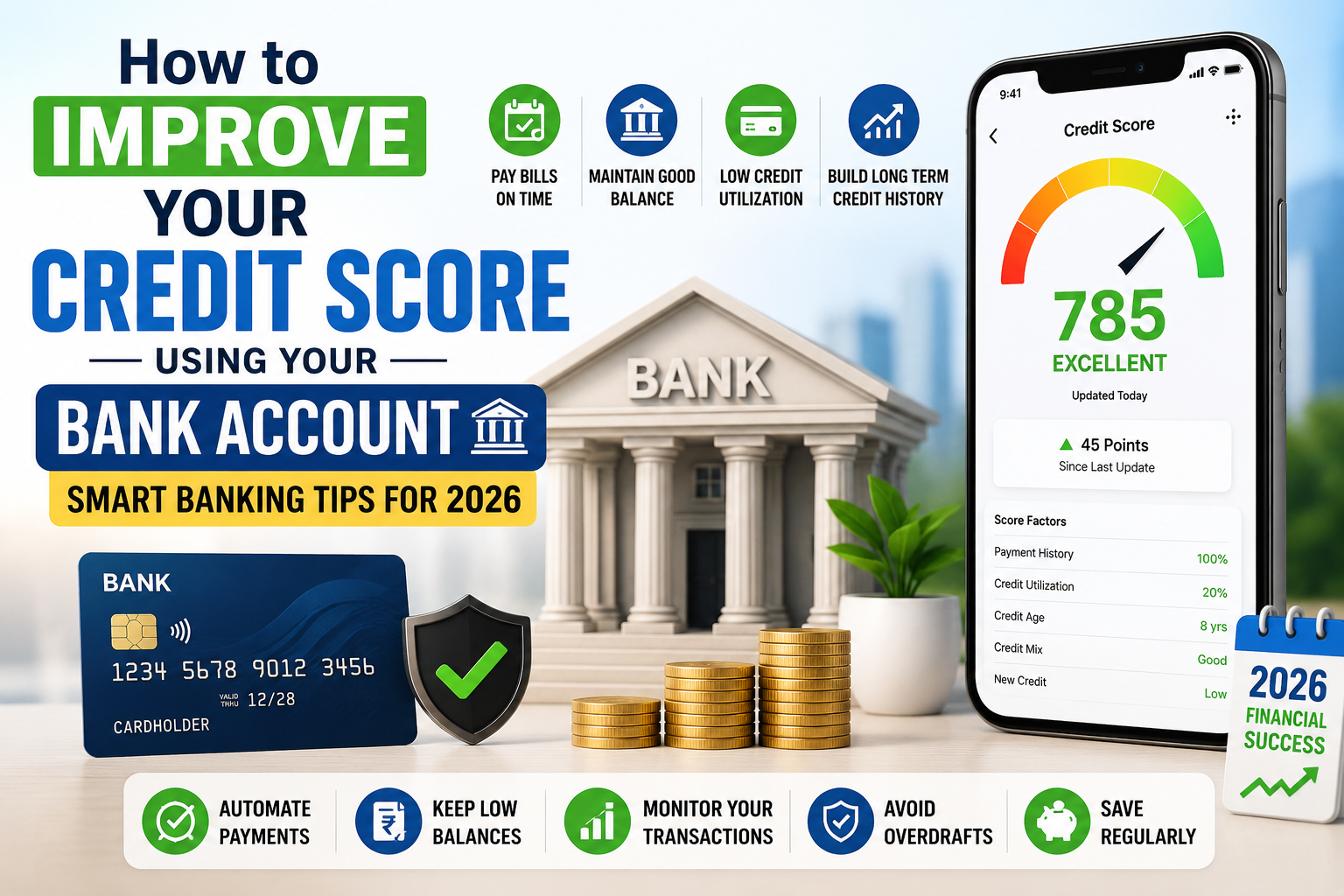
Understanding how to improve your credit score using your bank account can help you build better money management habits, avoid missed payments, and create a stronger financial foundation. The best part is that many of these strategies are simple and can be started immediately.
In this guide, we’ll explore practical ways your checking and savings accounts can support your credit goals and help you achieve greater financial success in 2026.
Why Your Credit Score Matters
Your credit score is a numerical representation of your creditworthiness. Lenders use it to evaluate how likely you are to repay borrowed money.
A strong credit score can help you:
- Qualify for lower interest rates
- Get approved for loans more easily
- Access better credit card offers
- Reduce insurance costs in some situations
- Improve rental application approval chances
Because credit affects many areas of financial life, improving your score can save thousands of dollars over time.
Can a Bank Account Directly Affect Your Credit Score?
A standard checking or savings account usually does not appear on your credit report.
However, your banking habits can indirectly influence important factors that impact your credit score.
These include:
- Payment history
- Debt management
- Financial stability
- Account organization
- Cash flow management
Learning how to improve your credit score using your bank account starts with understanding these connections.
Use Direct Deposit to Maintain Financial Stability
One of the easiest ways to improve financial management is through direct deposit.
When your paycheck automatically enters your checking account, you gain several advantages:
- Faster access to funds
- Better budgeting control
- Reduced risk of late payments
- Consistent cash flow
For example, Michael, a software developer in Texas, switched to direct deposit after missing several bill payments due to delayed paper checks. Once his income arrived automatically, he was able to pay bills on time and improve his financial organization.
Set Up Automatic Bill Payments
Payment history is one of the most important factors in credit scoring.
Late payments can negatively affect your credit profile and remain on credit reports for years.
Using your bank account to automate payments helps reduce this risk.
Bills You Can Automate
- Credit cards
- Auto loans
- Student loans
- Utility bills
- Mortgage payments
Automation helps ensure payments are made consistently and on time.
Build an Emergency Savings Fund
Unexpected expenses often cause people to rely heavily on credit cards.
A dedicated emergency fund can help prevent this.
Benefits of an Emergency Fund
- Covers unexpected expenses
- Reduces dependence on debt
- Protects your budget
- Supports consistent bill payments
Financial experts often recommend building savings that can cover several months of living expenses.
Even starting with small monthly deposits can make a difference over time.
Maintain Healthy Cash Flow
Strong cash flow management is an important financial skill.
When your checking account consistently has enough money to cover expenses, you’re less likely to miss payments or accumulate debt.
Good Cash Flow Habits
- Track income and expenses
- Review account balances regularly
- Avoid overspending
- Create a monthly budget
These habits support both financial stability and long-term credit improvement.
Avoid Overdraft Fees and Negative Banking History
Frequent overdrafts can create financial stress and make money management more difficult.
While overdrafts don’t usually impact credit scores directly, they can contribute to broader financial challenges.
Ways to Avoid Overdrafts
- Enable low-balance alerts
- Maintain a financial buffer
- Review transactions regularly
- Link savings accounts for overdraft protection
Good account management helps create stronger financial habits overall.
Use Banking Tools to Monitor Spending
Modern banks provide valuable tools that can help improve financial health.
Many mobile banking apps offer:
- Spending categories
- Budget tracking
- Transaction alerts
- Monthly summaries
- Savings goals
These tools make it easier to understand where your money goes and identify opportunities to improve your financial behavior.
Real-Life Example: How Banking Habits Improved a Credit Score
Consider Sarah, a teacher living in Florida.
Several years ago, she struggled with:
- Missed credit card payments
- Occasional overdrafts
- Limited savings
To improve her finances, she:
- Set up direct deposit
- Automated credit card payments
- Opened a savings account
- Created an emergency fund
- Used mobile banking alerts
Within a couple of years, Sarah developed stronger financial habits and significantly improved her credit profile.
The key wasn’t a quick fix—it was consistent money management supported by smart banking practices.
Keep Savings Separate from Spending Money
One useful strategy is maintaining separate accounts for different financial purposes.
For example:
Checking Account
Used for:
- Daily spending
- Bills
- Direct deposits
Savings Account
Used for:
- Emergency funds
- Future goals
- Financial reserves
Separating funds reduces the temptation to spend money intended for important financial objectives.
Step-by-Step Guide to Improve Your Credit Score Using Your Bank Account
If you’re serious about building stronger credit, follow these practical steps.
Step 1: Set Up Direct Deposit
Ensure income arrives consistently and on time.
Step 2: Automate Important Payments
Schedule recurring payments for:
- Credit cards
- Loans
- Utilities
Step 3: Create an Emergency Fund
Start small and contribute regularly.
Step 4: Monitor Spending Weekly
Review account activity through your banking app.
Step 5: Avoid Overdrafts
Use alerts and maintain a balance cushion.
Step 6: Build Consistent Savings Habits
Regular saving demonstrates financial discipline and helps prevent debt accumulation.
Common Mistakes to Avoid
Many people unintentionally slow their credit progress through avoidable mistakes.
Ignoring Account Balances
Failure to monitor spending can lead to overdrafts and missed payments.
Relying Entirely on Credit Cards
Without adequate savings, unexpected expenses may increase debt.
Missing Due Dates
Late payments remain one of the most damaging factors for credit scores.
Spending Emergency Savings
Emergency funds should be reserved for genuine financial emergencies.
Frequently Asked Questions (FAQ)
1. Can a checking account directly increase my credit score?
A checking account does not typically appear on your credit report, but good banking habits can support behaviors that improve credit health.
2. Does direct deposit help my credit score?
Direct deposit itself does not directly impact credit scores, but it can improve payment consistency and financial stability.
3. Should I keep savings and checking accounts at the same bank?
Many people find this convenient, though the best choice depends on your financial goals and available account features.
4. How much should I keep in an emergency fund?
Many experts suggest saving enough to cover several months of essential expenses, though any amount is better than none.
5. Can overdrafts hurt my credit?
Overdrafts do not usually affect credit scores directly, but ongoing account issues can create financial challenges that may impact credit-related obligations.
6. What is the fastest way to improve credit habits?
Consistent on-time payments, responsible spending, and strong money management practices are among the most effective long-term strategies.
Conclusion
Learning how to improve your credit score using your bank account is about developing better financial habits rather than searching for quick fixes. While checking and savings accounts do not directly determine your credit score, they can support the behaviors that lenders value most—on-time payments, responsible spending, consistent savings, and strong financial management.
By using direct deposit, automating bills, building an emergency fund, monitoring spending, and avoiding overdrafts, you can create a stronger financial foundation that supports long-term credit success.
Improving your credit score takes time, but every smart financial decision brings you one step closer to better opportunities, lower borrowing costs, and greater financial confidence.
Call to Action (CTA): Encourage readers to explore more articles on the website.
Want more practical personal finance tips? Explore more articles on our website for expert advice on credit scores, banking, saving money, investing, insurance, and building a stronger financial future.