Introduction
Many Americans believe investing is only for people with a lot of money. Social media often highlights stories of wealthy investors and large portfolios, making it seem impossible for the average person to get started. As a result, many people delay investing because they think they need thousands of dollars before they can begin.
The reality is very different. Thanks to modern investment platforms, fractional shares, and low-cost funds, investing has become more accessible than ever. Even small amounts invested consistently can grow into significant wealth over time.
Understanding how Americans can start investing with a small budget is important because inflation continues to affect the cost of living, and relying solely on savings accounts may not be enough to reach long-term financial goals. Whether you’re a student, young professional, parent, or retiree, learning how to invest with limited funds can help you build a stronger financial future.
Why Investing Matters Even If You Have Limited Money
Many people focus entirely on saving money, which is important. However, investing allows your money to work for you through potential growth over time.
Benefits of investing include:
- Building long-term wealth
- Preparing for retirement
- Beating inflation
- Creating additional income opportunities
- Achieving financial goals faster
For example, someone who invests $50 per month consistently for many years may accumulate far more wealth than someone who keeps that money in a low-interest account.
The key is starting early rather than waiting until you have a large amount to invest.
Common Myths About Investing
Before learning how Americans can start investing with a small budget, it’s important to address a few common misconceptions.
Myth 1: You Need Thousands of Dollars
Many investment platforms allow users to start with very small amounts.
Myth 2: Investing Is Only for Experts
While learning is important, beginners can start with simple investment options and gradually expand their knowledge.
Myth 3: Investing Is the Same as Gambling
Investing focuses on long-term ownership of assets and wealth building, while gambling relies primarily on chance.
Myth 4: It’s Too Late to Start
Whether you’re in your twenties or fifties, investing can still play an important role in achieving financial goals.
How Much Money Do You Need to Start Investing?
One of the biggest surprises for new investors is how little money may be needed to begin.
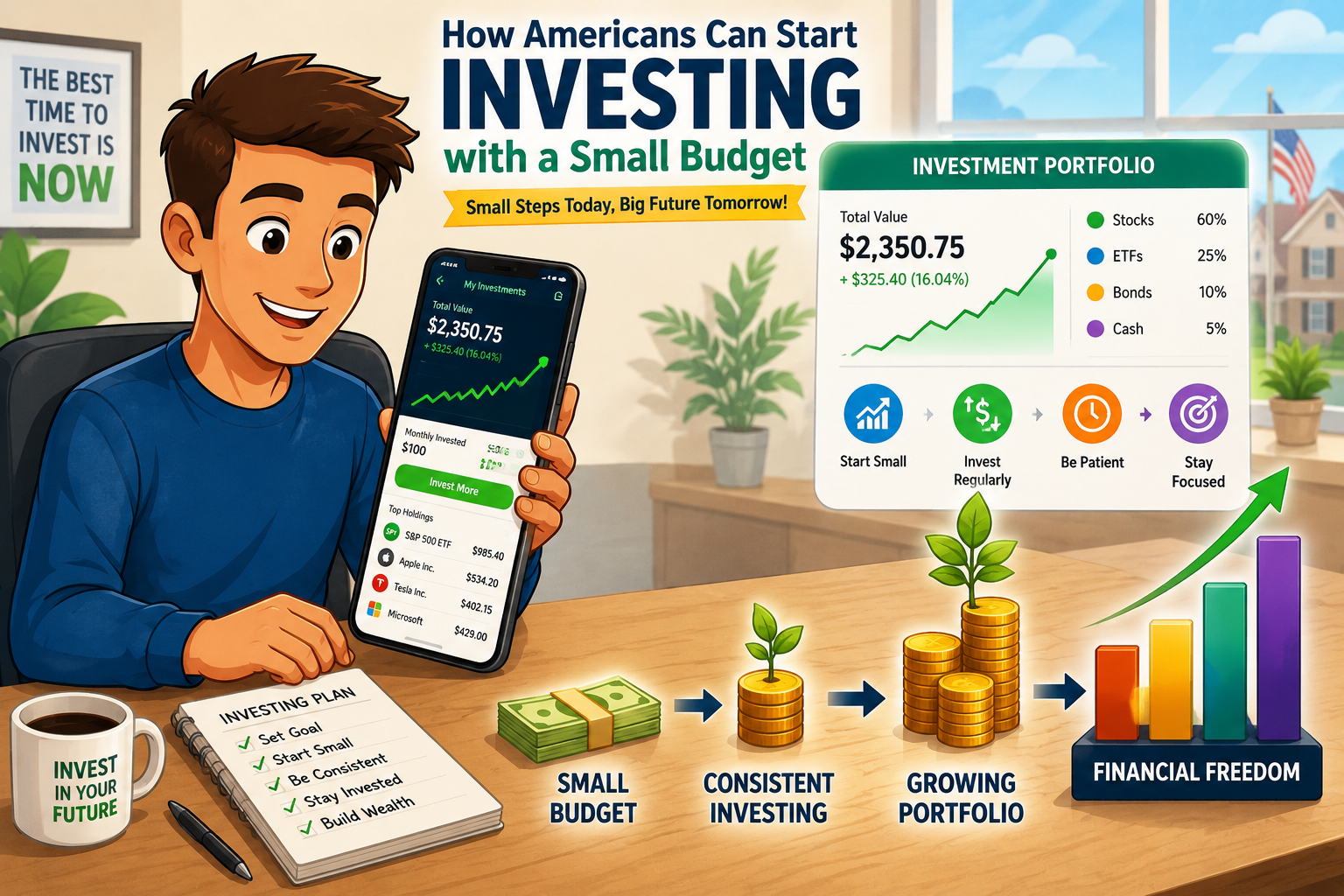
Many Americans start with:
- $25 per month
- $50 per month
- $100 per month
The exact amount matters less than consistency.
Small investments made regularly often produce better results than large investments made occasionally.
Investment Options for Small Budgets
Several investment choices are particularly suitable for beginners.
Exchange-Traded Funds (ETFs)
ETFs contain multiple investments within a single fund.
Benefits include:
- Diversification
- Lower risk compared to individual stocks
- Easy management
Many beginners use ETFs as a starting point.
Index Funds
Index funds track broad market indexes and offer exposure to many companies.
Advantages include:
- Lower fees
- Long-term growth potential
- Simple investment strategy
Fractional Shares
Fractional shares allow investors to purchase a portion of a stock rather than a full share.
This means you can invest in well-known companies without needing large amounts of money.
Retirement Accounts
Retirement-focused investment accounts can offer tax advantages and support long-term wealth building.
Real-Life Example: Starting Small
Consider Jake, a 26-year-old teacher in Arizona.
Jake believed investing required thousands of dollars, so he postponed getting started for years.
Eventually, he decided to invest just $50 per month.
He:
- Opened an investment account
- Chose diversified funds
- Automated monthly contributions
- Focused on long-term growth
Over time, his investments steadily increased. More importantly, he developed a habit of investing consistently.
Jake’s success didn’t come from having a large budget—it came from taking action.
Step-by-Step Guide to Start Investing with a Small Budget
If you’re wondering how Americans can start investing with a small budget, follow these practical steps.
Step 1: Review Your Financial Situation
Before investing, evaluate:
- Income
- Expenses
- Debt obligations
- Savings
Understanding your finances helps determine how much you can comfortably invest.
Step 2: Build an Emergency Fund
Unexpected expenses happen.
Financial experts often recommend having emergency savings before making significant investments.
Even a modest emergency fund can provide peace of mind.
Step 3: Set Clear Financial Goals
Ask yourself:
- Are you saving for retirement?
- Building long-term wealth?
- Preparing for a home purchase?
- Creating passive income?
Your goals will influence your investment choices.
Step 4: Open an Investment Account
Choose a platform that offers:
- Low fees
- Educational resources
- Easy-to-use tools
- Access to diversified investments
Many platforms are designed specifically for beginners.
Step 5: Start Small
Don’t wait for the perfect moment.
Even small monthly contributions can help establish strong investing habits.
Step 6: Automate Contributions
Automatic investing removes emotion from the process.
Benefits include:
- Consistency
- Simplicity
- Better long-term discipline
Automation is one of the most effective investing tools available.
Mistakes New Investors Should Avoid
Many beginners make avoidable mistakes.
Trying to Get Rich Quickly
Investing works best when viewed as a long-term strategy.
Investing Money Needed Soon
Money required for immediate expenses may not be suitable for long-term investments.
Ignoring Diversification
Spreading investments across multiple assets helps reduce risk.
Following Social Media Hype
Popular trends do not always align with sound investing principles.
Constantly Checking Market Movements
Daily fluctuations are normal and often have little impact on long-term goals.
Tips for Long-Term Investing Success
Successful investing often comes down to simple habits.
Consider these tips:
- Invest consistently
- Stay patient
- Focus on long-term growth
- Continue learning
- Diversify investments
- Review goals annually
Building wealth is typically a gradual process rather than an overnight success story.
Why Time Matters More Than Amount
One of the biggest advantages small-budget investors have is time.
Someone who begins investing at age 25 often has more opportunity for long-term growth than someone who waits until age 40, even if the later investor contributes larger amounts.
The combination of regular investing and long-term growth can have a powerful impact on financial outcomes.
This is why many financial professionals encourage people to start investing as early as possible.
Frequently Asked Questions (FAQ)
1. Can I start investing with only $50?
Yes. Many investment platforms allow individuals to begin with relatively small amounts of money.
2. What is the best investment for beginners?
Many beginners choose diversified investments such as ETFs or index funds because they provide broad market exposure.
3. Is investing risky?
All investments involve some risk, but diversification and long-term planning can help manage that risk.
4. Should I pay off debt before investing?
The answer depends on factors such as interest rates, financial goals, and overall financial health.
5. How often should I invest?
Many investors contribute regularly, such as monthly or with each paycheck.
6. What happens if the market goes down?
Market declines are a normal part of investing. Long-term investors typically focus on long-range goals rather than short-term fluctuations.
Conclusion
Learning how Americans can start investing with a small budget proves that building wealth is not reserved for the wealthy. Modern investment tools have made it easier than ever for ordinary Americans to begin investing with limited funds.
The most important step is getting started. By investing consistently, staying diversified, focusing on long-term goals, and avoiding common mistakes, even small contributions can grow into meaningful financial progress over time.
Remember, successful investing isn’t about how much money you start with—it’s about developing habits that support long-term financial growth. Starting today, even with a small amount, may be one of the best investments you ever make in your future.
Call to Action (CTA): Encourage readers to explore more articles on the website.
Looking for more personal finance and investing advice? Explore more articles on our website for expert tips on saving money, retirement planning, credit improvement, banking strategies, and building long-term financial success.