
Introduction
Many Americans want to grow their wealth, but the idea of investing in the stock market can feel overwhelming. Terms like stocks, ETFs, dividends, and market volatility often make investing seem complicated, especially for beginners.
The truth is that investing doesn’t have to be difficult. In fact, many successful investors started with little knowledge and small amounts of money. The key is understanding the basics and taking a long-term approach.
This Beginner’s Guide to Investing in the U.S. Stock Market will explain how the stock market works, why investing matters, and the steps you can take to start building wealth. Whether you’re saving for retirement, a home, or financial freedom, learning to invest can be one of the smartest financial decisions you make.
What Is the U.S. Stock Market?
The stock market is a place where investors buy and sell shares of publicly traded companies.
When you purchase a stock, you become a partial owner of that company.
Some of the largest companies in the United States trade on major stock exchanges, including:
- Technology companies
- Healthcare businesses
- Financial institutions
- Consumer brands
- Energy companies
As these companies grow and generate profits, investors may benefit through rising stock prices and dividend payments.
Why Investing Matters
Keeping money in a regular savings account can provide security, but investing offers the potential for long-term growth.
Investing can help you:
- Build wealth over time
- Save for retirement
- Beat inflation
- Create passive income opportunities
- Reach major financial goals
For example, a young professional who consistently invests part of each paycheck may accumulate significantly more wealth over several decades than someone who relies only on savings accounts.
This is one reason why learning about the U.S. stock market is so important for long-term financial success.
Understanding Basic Investment Terms
Before investing, it’s helpful to understand a few common terms.
Stocks
A stock represents ownership in a company.
If the company performs well, the value of your investment may increase.
Dividends
Some companies share profits with investors through dividend payments.
These payments can provide additional income.
Exchange-Traded Funds (ETFs)
ETFs are investment funds that hold multiple stocks.
They help investors diversify without buying individual stocks one by one.
Portfolio
Your portfolio is the collection of investments you own.
Market Volatility
Stock prices rise and fall regularly.
These price movements are known as market volatility.
Benefits of Investing in the Stock Market
There are several reasons why millions of Americans invest each year.
Potential for Long-Term Growth
Historically, stocks have provided stronger long-term returns than many traditional savings options.
Easy Access
Modern brokerage platforms allow investors to start with relatively small amounts of money.
Diversification Opportunities
Investors can spread risk across multiple industries and companies.
Retirement Planning
Many Americans use stock market investments as part of retirement savings strategies.
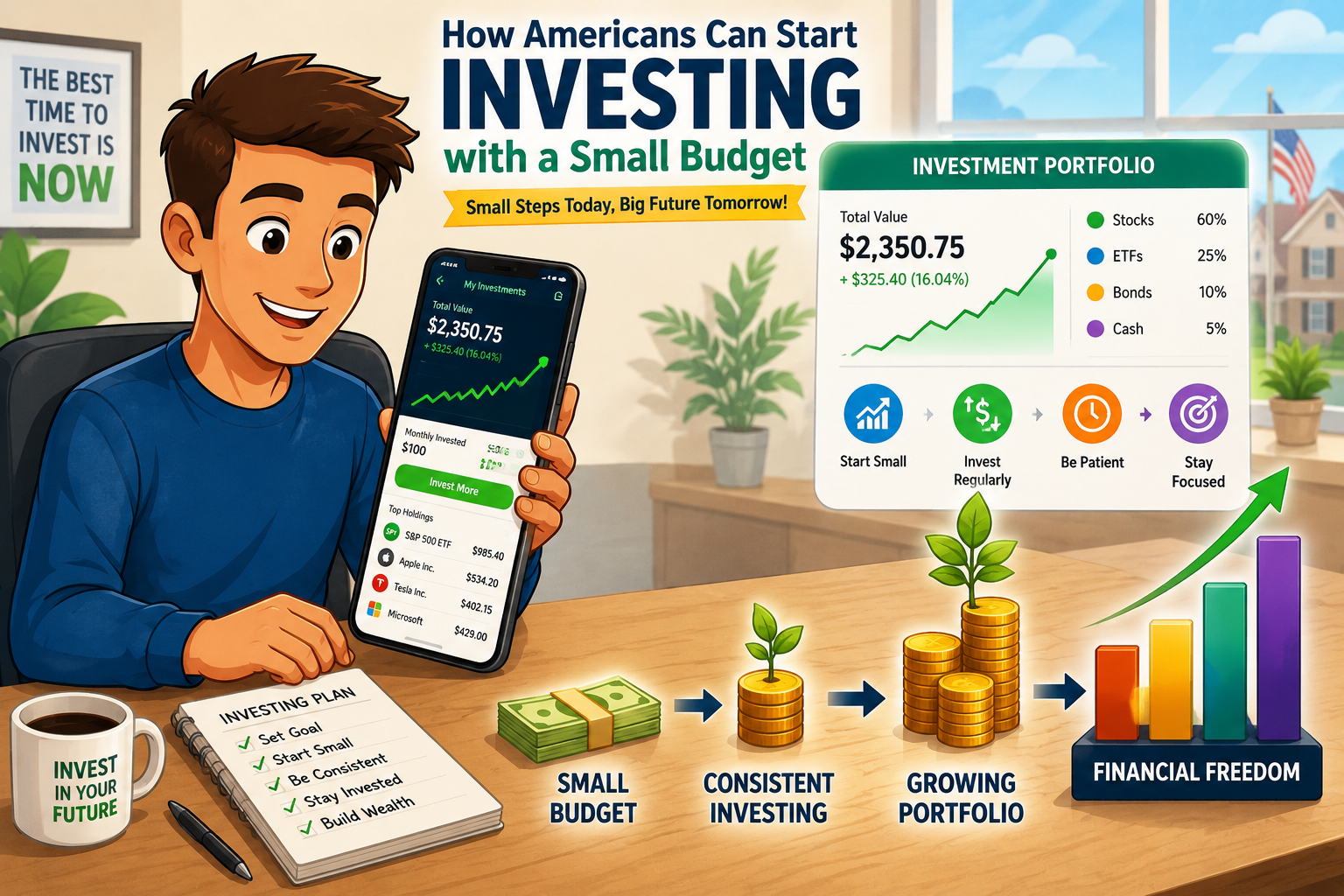
Real-Life Example: Starting Small
Consider Emily, a 28-year-old marketing specialist living in Denver.
She wanted to begin investing but believed she needed thousands of dollars to start.
Instead, she:
- Opened a brokerage account
- Invested a small amount each month
- Focused on diversified ETFs
- Continued investing consistently
Over time, her portfolio steadily grew. The most important factor wasn’t a large initial investment—it was consistency.
This example shows that beginners don’t need enormous amounts of money to get started.
How to Start Investing in the U.S. Stock Market
If you’re new to investing, follow these practical steps.
Step 1: Define Your Financial Goals
Ask yourself:
- Are you saving for retirement?
- Building long-term wealth?
- Planning for a home purchase?
- Creating passive income?
Your goals influence your investment strategy.
Step 2: Build an Emergency Fund First
Before investing, establish emergency savings.
Having cash reserves helps you avoid selling investments during unexpected financial situations.
Step 3: Open a Brokerage Account
A brokerage account allows you to buy and sell investments.
When comparing providers, consider:
- Fees
- Investment options
- Educational tools
- User experience
Step 4: Learn About Diversification
Diversification means spreading investments across different assets.
Benefits include:
- Reduced risk
- Greater stability
- Better long-term balance
Many beginners start with diversified ETFs because they provide exposure to multiple companies.
Step 5: Invest Consistently
Many successful investors contribute regularly regardless of market conditions.
This strategy can reduce the impact of short-term market fluctuations.
Step 6: Think Long Term
The stock market experiences ups and downs.
Long-term investors typically focus on years and decades rather than daily price movements.
Common Mistakes Beginners Should Avoid
New investors often make similar mistakes.
Trying to Get Rich Quickly
Investing is generally most effective when approached with patience.
Investing Without Research
Always understand what you’re buying before investing money.
Letting Emotions Control Decisions
Fear and excitement can lead to poor investment choices.
Ignoring Diversification
Putting all your money into one stock increases risk.
Constantly Checking Prices
Short-term market movements can be distracting.
Long-term goals usually matter more than daily fluctuations.
Investment Options for Beginners
If you’re unsure where to start, consider these common choices.
Index Funds
Index funds track market indexes and offer broad diversification.
ETFs
Exchange-traded funds provide flexibility and diversification.
Dividend Stocks
These investments may generate regular income payments.
Retirement Accounts
Accounts such as employer-sponsored retirement plans and individual retirement accounts can provide tax advantages for long-term investors.
Tips for Long-Term Investing Success
Building wealth takes time and discipline.
Consider these strategies:
- Invest consistently
- Stay diversified
- Avoid emotional decisions
- Continue learning
- Focus on long-term goals
- Review your portfolio periodically
Small, steady actions often produce the strongest results over time.
Frequently Asked Questions (FAQ)
1. How much money do I need to start investing?
Many brokerage platforms allow investors to start with relatively small amounts, making investing accessible to beginners.
2. Is investing in the stock market risky?
All investments involve some level of risk. However, diversification and long-term investing can help manage risk.
3. What is the best investment for beginners?
Many beginners choose diversified ETFs or index funds because they provide broad market exposure.
4. Should I invest before paying off debt?
The answer depends on factors such as interest rates, financial goals, and overall financial health.
5. How often should I check my investments?
Most long-term investors review their portfolios periodically rather than monitoring daily market movements.
6. Can I lose money in the stock market?
Yes. Stock prices can rise and fall. This is why diversification and long-term planning are important.
Conclusion
This Beginner’s Guide to Investing in the U.S. Stock Market demonstrates that investing doesn’t have to be complicated. By understanding basic concepts, setting clear financial goals, and investing consistently, beginners can start building wealth and working toward financial independence.
The most important step is simply getting started. You don’t need to be a financial expert or have a large amount of money to begin investing. What matters most is developing good habits, staying patient, and focusing on long-term growth.
The earlier you start learning and investing, the more time your money has to grow and support your future goals.
Call to Action (CTA): Encourage readers to explore more articles on the website.
Want to learn more about investing, personal finance, retirement planning, banking, and wealth-building strategies? Explore more articles on our website and discover practical tips to help you make smarter financial decisions every day.